ENGINEERING SERVICES / TEXAS & OHIO

Grounding System Analysis

Grounding system analysis for new electrical installations and existing facilities. Review proposed or installed grounding arrangements and relevant site conditions to support electrical design and informed project decisions.

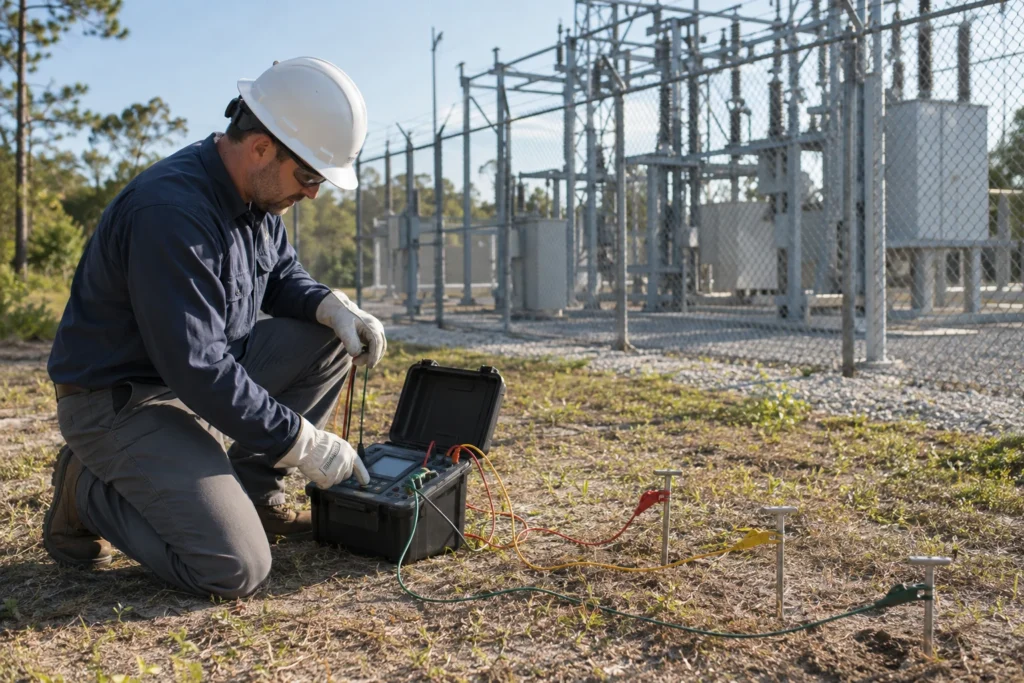
Photorealistic illustration of a technician performing an earth-resistance test outside a substation

THE DECISION BEHIND THE STUDY

Evaluate the paths that protection depends on.

Grounding performance depends on the installation, fault-current paths, protection clearing behavior, and, where relevant, soil conditions. A useful analysis defines these inputs explicitly and connects the results to the specific site and operating assumptions.

WHAT WE EVALUATE

A scope built around your system.

Planned or existing arrangement

Review available drawings, grounding connections, equipment layout, and the boundaries of the proposed analysis.

Site & fault inputs

Identify the required fault-current, clearing-time, and soil information. Define field data collection where it is needed.

Performance evaluation

Assess grounding performance and, where applicable, touch and step potential. Develop recommendations tied to the evaluated conditions.

WHAT YOU RECEIVE

Findings your team can use.

01

Grounding model and documented input assumptions

02

Results for the agreed performance criteria

03

Identified concerns and recommended improvements

04

Drawings or design details when included in the scope

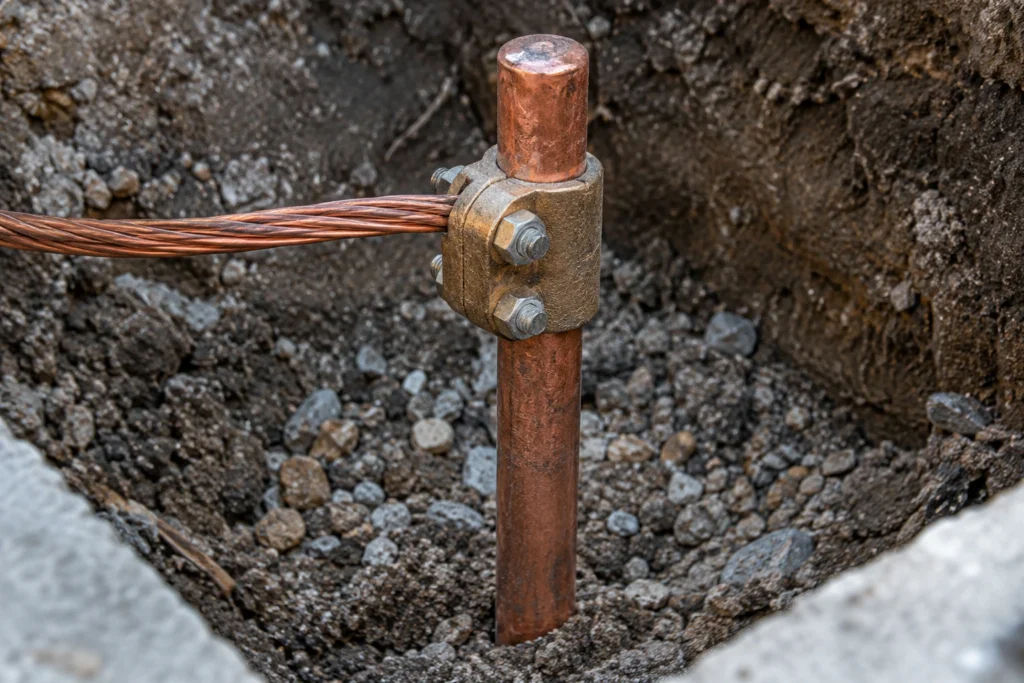
Photorealistic illustration of a copper grounding conductor clamped to a ground rod

What helps us get started

For new construction, share the site layout, proposed grounding design, available soil information, and protection data. For an existing facility, include grounding drawings and prior test records where available. The initial review identifies the inputs and verification needed.

BEFORE WE BEGIN

A clearer starting point.

Is grounding analysis the same as a ground-resistance test?

No. A resistance measurement is one type of field information. An engineering analysis may consider additional factors such as fault-current distribution, clearing time, geometry, and potential differences.

Does every project need a touch-and-step study?

The required evaluation depends on the installation and project objectives. The scope should identify which analyses are relevant before field work or modeling begins.

LET’S TALK ABOUT YOUR FACILITY

Make your next decision with confidence.

Tell us about your new building, planned electrical loads, or existing facility. We’ll help define the right electrical design or study scope for your project.

Scroll to Top