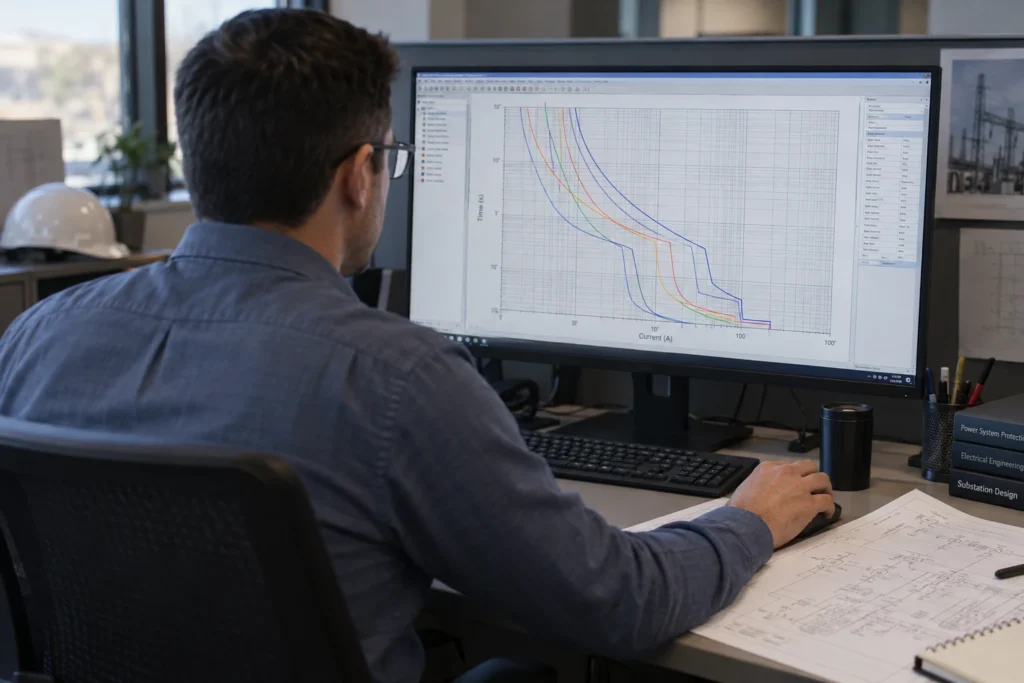
Protective device coordination for new electrical designs and existing facilities. Review how planned or installed breakers, fuses, and relays work together to support fault isolation, equipment protection, and continuity of service.
When a fault occurs, the operation of one protective device can affect much more than the faulted circuit. Coordination studies examine the relationships between devices, equipment limits, and system conditions so that settings decisions are based on the whole installation.
WHAT WE EVALUATE
A scope built around your system.
Device inventory
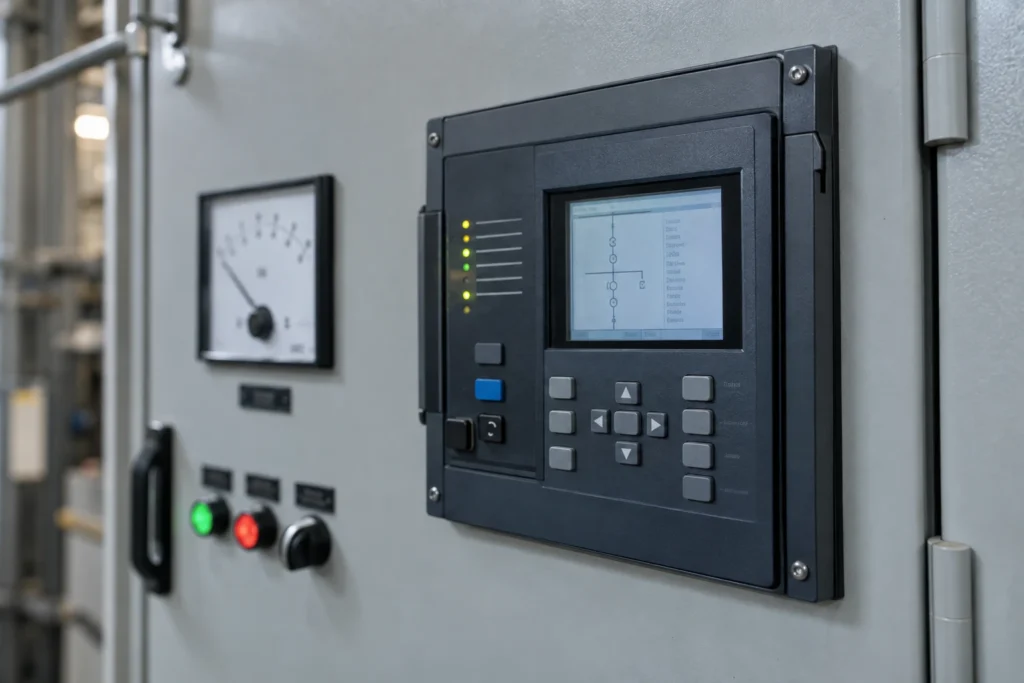
Review specified or installed device types, ratings, trip units, relay functions, and available settings against the proposed or existing electrical one-line.
Curve & sequence review
Compare time-current characteristics and operating sequences for relevant fault conditions. Identify overlap, gaps, and protection constraints.
Settings recommendations
Develop proposed settings or device changes and explain the tradeoffs between selective operation, protection, and arc-flash mitigation.
WHAT YOU RECEIVE
Findings your team can use.
01
Time-current coordination plots for the agreed scope
02
Existing and proposed device-setting information
03
Explanation of coordination limits and exceptions
04
A prioritized implementation and verification plan
What helps us get started
For a new design, share the proposed one-line, device specifications, transformer and motor data, and intended operating arrangements. For an existing system, available settings, relay files, and trip records can also help define the study.
BEFORE WE BEGIN
A clearer starting point.
Can every system achieve complete selectivity?
Not always. Device capabilities, fault-current levels, equipment requirements, and existing system architecture can impose limits. The report should explain the achievable result and any remaining constraints.
Are recommended settings installed automatically?
No. Implementation and testing are separate activities unless they are expressly included in the project scope. Changes should follow the facility’s approval and verification process.
LET’S TALK ABOUT YOUR FACILITY
Make your next decision with confidence.
Tell us about your new building, planned electrical loads, or existing facility. We’ll help define the right electrical design or study scope for your project.